Küçükçalık and Premier Home's $50 Million Green Transformation Move
Turkish home textile giant Küçükçalık and Premier Home are accelerating their green transformation goals with $50 million in sustainability financing from the IFC. This investment covers projects for a new recycling facility, solar energy, and production line expansion.
Küçükçalık and its brand Premier Home, leading players in the Turkish home textile sector, are strengthening their position in global competition with strategic moves recently undertaken. The $50 million sustainability financing provided by IFC, a World Bank institution, accelerates the firm's green transformation goals while also increasing its production capacity and efficiency. This investment serves as an important signal for the future of the sector.
This critical development, beyond being just a company news item for Turkish textile manufacturers, wholesalers, and exporters, exemplifies the sector's general direction and its speed of adaptation to global trends. Green financing models, fast delivery strategies, and the success of niche product groups in the domestic market offer valuable lessons for all stakeholders.
$50 Million Sustainability Financing: A Milestone for Green Transformation
The $50 million investment received by Küçükçalık and Premier Home from IFC, a World Bank institution, stands out as the firm's largest and most strategic financing move to date. This massive fund will be utilized across three main axes, shaping the firm's future growth and sustainability roadmap. Firstly, the new recycling facility to be established in Sakarya demonstrates the firm's commitment to circular economy principles. This facility will enable textile waste to be reprocessed into raw materials, thereby reducing its environmental footprint and increasing raw material supply security. This step is also of great importance for compliance with the requirements of the European Green Deal and for gaining a competitive advantage in global markets.
Secondly, the integration of solar energy systems (SES) on the roofs of Bursa factories will not only reduce the firm's energy costs but also decrease carbon emissions. This investment in renewable energy sets an example for the sector in adopting sustainable production practices. Thirdly, the expansion of synthetic yarn and polyester chip production lines will strengthen the firm's vertical integration, reducing raw material dependency and providing greater control over production processes. These investments have the potential to increase the firm's operational resilience, especially considering global supply chain disruptions and raw material price fluctuations experienced in recent years.
This financing is an important indicator not only for Küçükçalık but also for the Turkish textile sector as a whole. The interest of international financial institutions in green transformation projects shows that new doors can open for Turkish manufacturers for sustainability-oriented investments. It is critical for other firms in the sector to explore similar financing models and revise their sustainability strategies in this direction to remain competitive in global markets.
"Premier Express" Global Lead Time Initiative: A New Era in Speed and Agility
In the face of global logistics crises and increasing customer expectations, fast delivery capability has become a decisive factor in international trade. Premier Home's "Premier Express" Fast-Track stock service was developed as a direct response to this need. Aiming to strengthen its hand at international fairs like Heimtextil and create a speed advantage against global competitors, the brand is focusing on an operational infrastructure that can prepare a vast collection, including tulle, jacquard upholstery, and duvet cover sets, for shipment worldwide within 7 days.
- Critical Point 1: Inventory Management and Digital Integration: This level of speed and efficiency is not possible without advanced inventory management systems and digital integration. Premier Home's investments in this area demonstrate that all processes from order to shipment are optimized and can be tracked in real-time.
- Critical Point 2: Differentiating in Global Competition: Especially considering the long lead times of Far Eastern competitors and increasing logistics costs, the 7-day delivery promise could bring significant demand from international buyers to Premier Home. This could be a model that generally strengthens the position of the Turkish textile sector in the global supply chain.
- Critical Point 3: Customer Satisfaction and Brand Loyalty: Fast and reliable delivery is a critical expectation for B2B customers. With "Premier Express," there is high potential to increase customer satisfaction, fostering long-term collaborations and brand loyalty. This is a significant advantage, especially for wholesalers and retailers working on a project basis.
- Critical Point 4: Sectoral Recommendation: Turkish textile manufacturers should view logistics and supply chain management not as a cost factor, but as a strategic tool that provides a competitive advantage. Digitalization and automation play a key role in achieving these fast delivery goals.
"Premier Duck" Dominance in the Domestic Market: Success in Niche Products
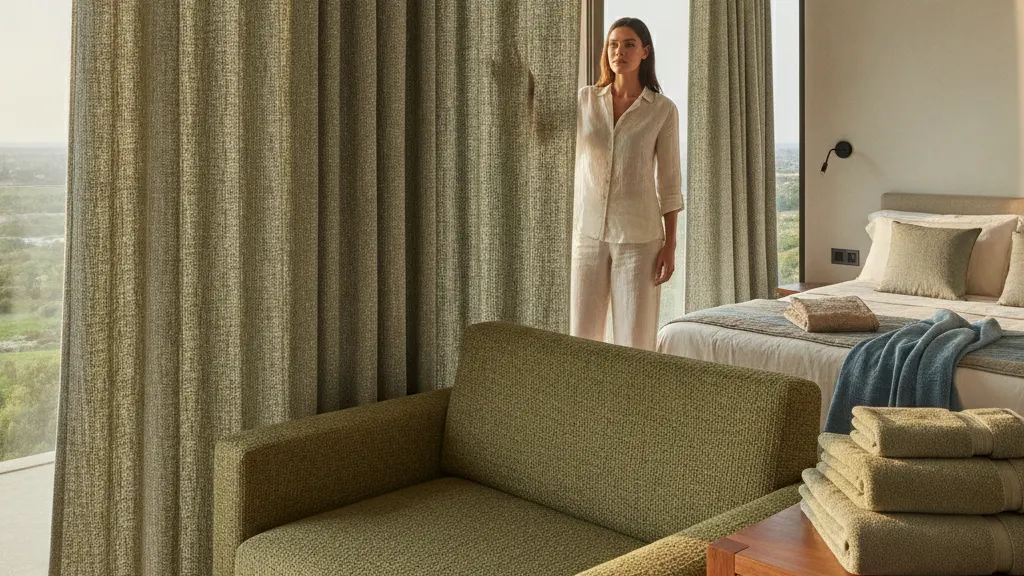
Alongside global strategies, Premier Home does not overlook domestic market dynamics. Currently, the most active product group in the retail and dealer channel is the brand's "Premier Duck" series, a stain-resistant and liquid-repellent Duck linen series offering over 50 color options. This product group receives intense orders from haberdashers, especially for summer venues, outdoor cushions, practical-use blackout curtains, and tablecloth combinations. This situation shows that the firm can both follow global trends and produce flexible and fast solutions for the specific needs of the local market.
The success of the "Premier Duck" series reflects the Turkish consumer's demand for practical, durable, and aesthetic products. Stain-resistant and liquid-repellent features align with the modern lifestyle's expectation of ease of use. The wide color palette offers extensive design freedom to consumers and interior designers. The success of such niche products in the domestic market can also guide other manufacturers in market research and product development strategies. Firms that analyze local dynamics well, offer value-added products suitable for consumer expectations, can achieve significant growth potential in the domestic market.
Conclusion and Outlook for the Turkish Textile Sector
The steps taken by Küçükçalık and Premier Home provide important clues about the future of the Turkish home textile sector. The firm's efforts to fund green transformation and raw material production power with international financing, while simultaneously creating a speed advantage against global competitors through digital integration and fast shipment, reflect general trends in the sector. Sustainability, speed, flexibility, and customer-centricity have now become indispensable elements in global competition.
For Turkish textile manufacturers, wholesalers, and exporters, these developments contain important lessons to consider in their strategic planning. Investing in green production practices, optimizing supply chains, and accelerating digitalization processes will not only provide cost advantages but also reinforce the image of a 'reliable and sustainable supplier' in international markets. Premier Home's "Premier Express" model once again highlights the decisive role of fast delivery in global markets. The success of "Premier Duck" in the domestic market, on the other hand, emphasizes the importance of closely following local consumer trends and creating added value with niche products. By taking these strategic moves as an example, the Turkish textile sector can solidify its leading position in the global market and achieve sustainable growth momentum.
Turkish home textile giant Küçükçalık and Premier Home are accelerating their green transformation goals with $50 million in sustainability financing from the IFC. This investment covers projects for a new recycling facility, solar energy, and production line expansion.